.avif)
.avif)


Does Artificial Turf Save Water in Utah?
Yes, artificial turf can help save water in Utah when it replaces traditional grass areas that require regular irrigation.
That is the simple answer.
The more complete answer is that water savings depend on the size of the area replaced, how much the lawn was watered before, the efficiency of the sprinkler system, local weather, property layout, and how the finished landscape is designed.
For many Utah homeowners, artificial turf is not about replacing every living plant or turning the entire yard into synthetic grass. It is about making smarter choices in the parts of the yard that use the most water, need the most maintenance, or never seem to stay healthy through the summer.
During hot and dry Utah summers, those areas often include side yards, pet areas, park strips, high-traffic lawn sections, putting greens, pool surrounds, play areas, and front yard sections that are mostly decorative.
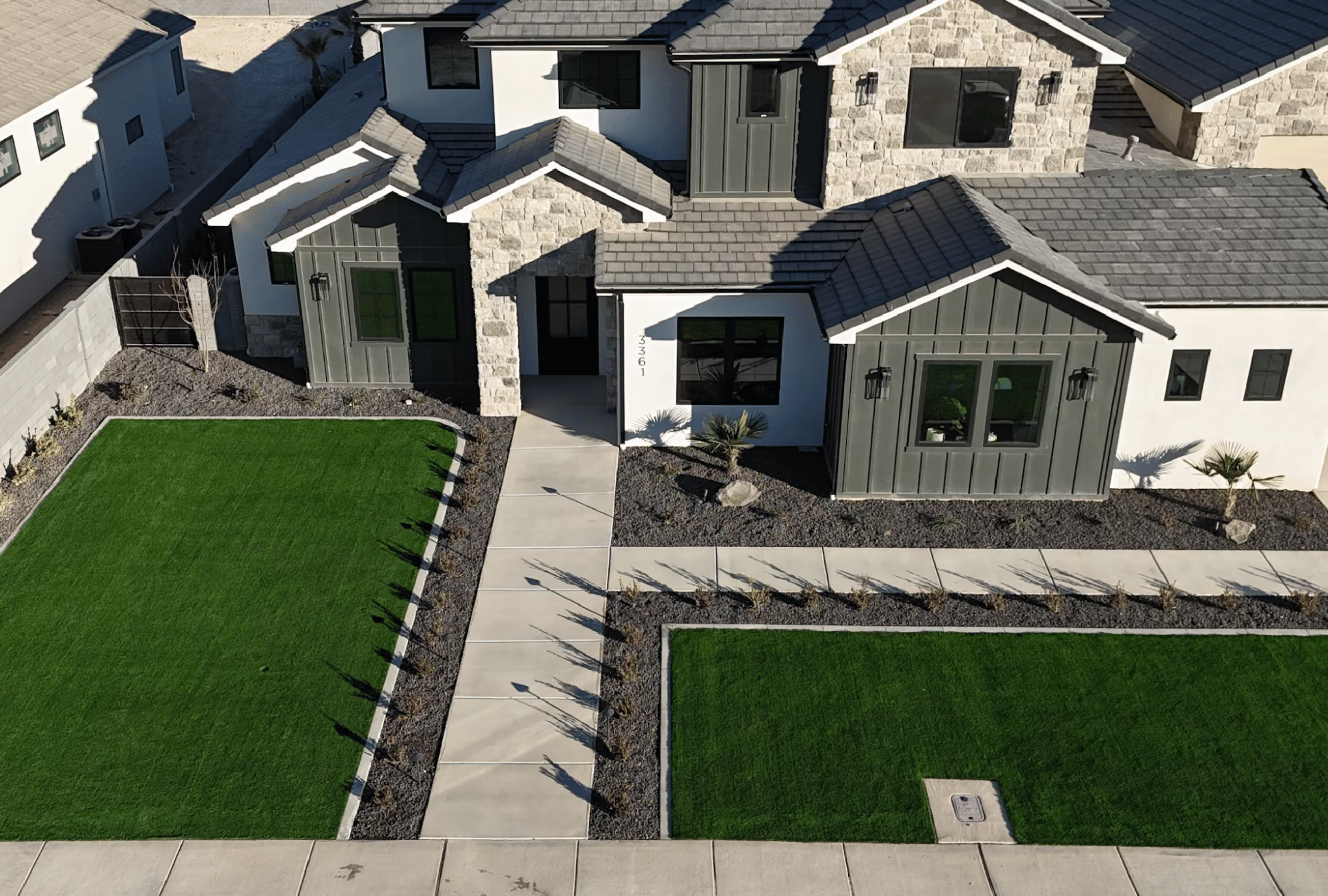
When those high-water lawn areas are replaced with quality artificial turf, the result can be a cleaner, greener, lower-maintenance space that does not need daily lawn irrigation to stay usable.
Why Water Use Matters in Utah
Utah homeowners are paying closer attention to outdoor water use because drought conditions have made traditional lawns harder to maintain.
Grass can look beautiful, but it usually needs consistent irrigation to stay green through Utah’s hottest months. When temperatures rise, soil dries out, and watering schedules tighten, many lawns start to show stress quickly.
Homeowners often notice:
• Brown patches
• Dry spots
• Uneven sprinkler coverage
• Water running onto sidewalks and driveways
• High watering bills
• Muddy areas near pets or kids
• Grass that looks good in spring but struggles by midsummer
• Park strips that take water but provide little usable space
• Side yards that never grow evenly
• Repeated reseeding and lawn repair
These problems are not just cosmetic. They usually point to a bigger issue: parts of the yard may not be well suited for traditional grass.
That is where artificial turf can make sense.
How Artificial Turf Saves Water
Artificial turf saves water by removing the need for regular lawn irrigation in the areas where it replaces natural grass.
Traditional grass needs water to grow and stay green. Artificial turf does not. Once installed, turf keeps its green appearance without daily watering, sprinkler cycles, fertilizer, mowing, or reseeding.
This can be especially helpful in Utah because many homeowners are not trying to remove every inch of landscaping. They are trying to reduce watering in the places where grass is least practical.
For example, if a homeowner replaces a side yard that needs frequent watering but still turns patchy, that area no longer needs lawn irrigation. If they replace a dog run that gets muddy and damaged every year, they can reduce the watering and repair cycle in that space. If they replace a park strip that uses sprinkler water but is rarely used, they can create a cleaner, lower-water frontage.
The water savings come from replacing irrigated grass with a surface that does not need irrigation to stay green.
Does Artificial Turf Eliminate Water Use Completely?
Artificial turf does not need water to grow, but that does not mean it will never be rinsed.
Some turf areas may need occasional water for cleaning, especially pet turf, play areas, and high-use spaces. Homeowners may also rinse turf during hot weather or after heavy use.
The difference is that artificial turf does not need regular irrigation to survive.
Natural grass may need repeated watering throughout the week during hot months. Artificial turf may only need occasional rinsing for cleaning or comfort. For many homeowners, that is a major difference in both water use and yard maintenance.
A more accurate way to think about it is this:
Artificial turf can greatly reduce the amount of water needed in the lawn areas it replaces, but it should still be maintained properly.
Artificial Turf Works Best When Used Strategically
The best water-saving turf projects are not always full yard conversions.
In many Utah yards, the smartest approach is to identify the areas where natural grass is causing the most problems and replace those first.
That may include:
• Side yards that are hard to water evenly
• Dog runs and pet relief areas
• Park strips along the street
• Putting greens
• Play areas
• Pool surrounds
• High-traffic backyard sections
• Narrow strips between concrete and fencing
• Front yard sections used mostly for curb appeal
• Lawn areas that constantly turn brown or muddy
These are the areas where turf can often make the biggest impact because they are either difficult to maintain, heavy-use, or mostly decorative.
A strategic turf plan helps homeowners keep the parts of the yard they value while reducing water use in the areas that are not performing well.
Why Turf and Xeriscape Work Well Together
Artificial turf can be even more effective when it is part of a full drought-smart landscape plan.
A strong turf and xeriscape layout may include:
• Artificial turf for green, usable space
• Decorative rock for low-water coverage
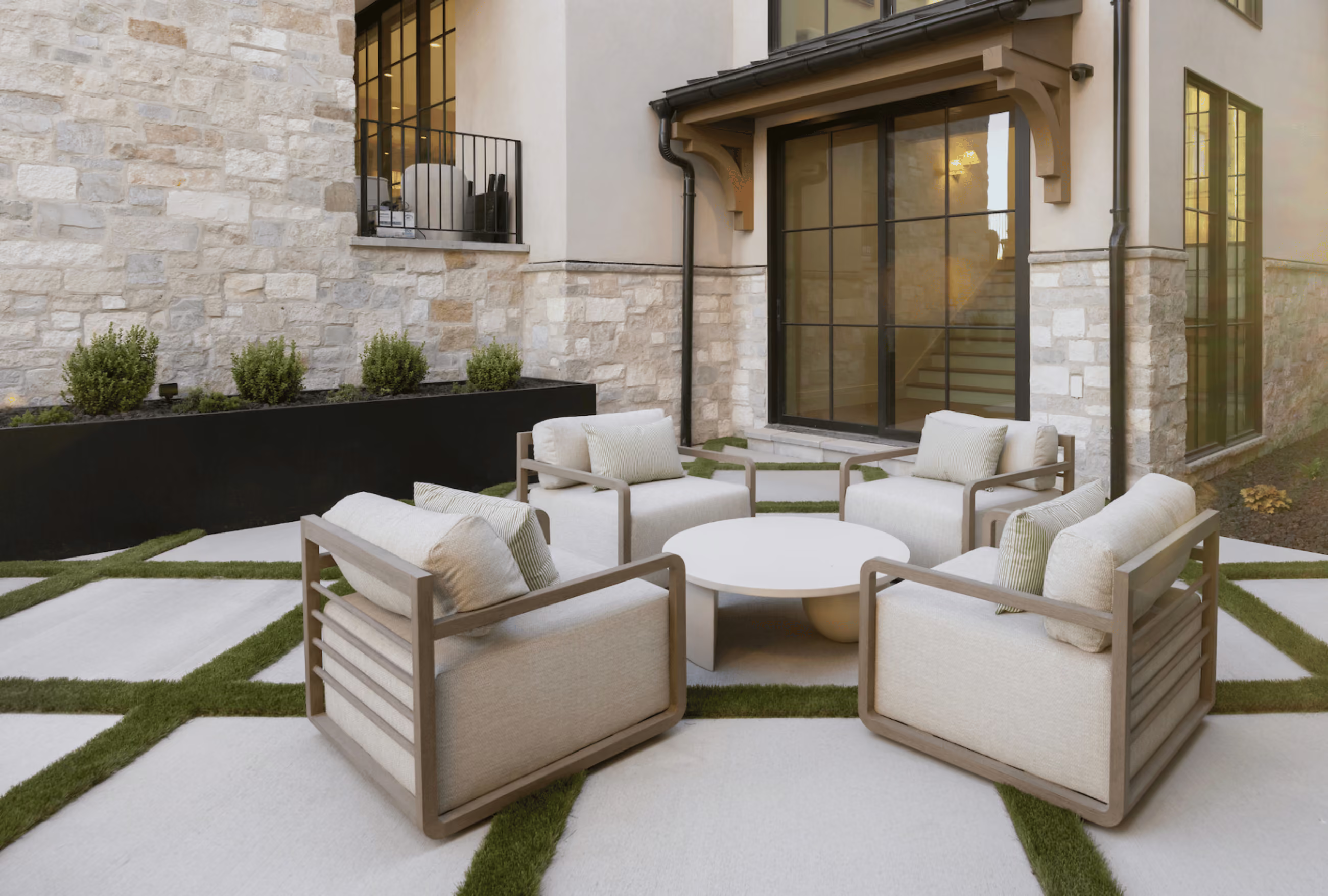
• Pavers or concrete for patios, pathways, and outdoor living
• Drought-tolerant plants for texture, shade, and color
• Drip irrigation for planted areas
• Clean edging between turf, rock, and hardscape
• Proper drainage for long-term performance
This type of design gives homeowners the best of both worlds.
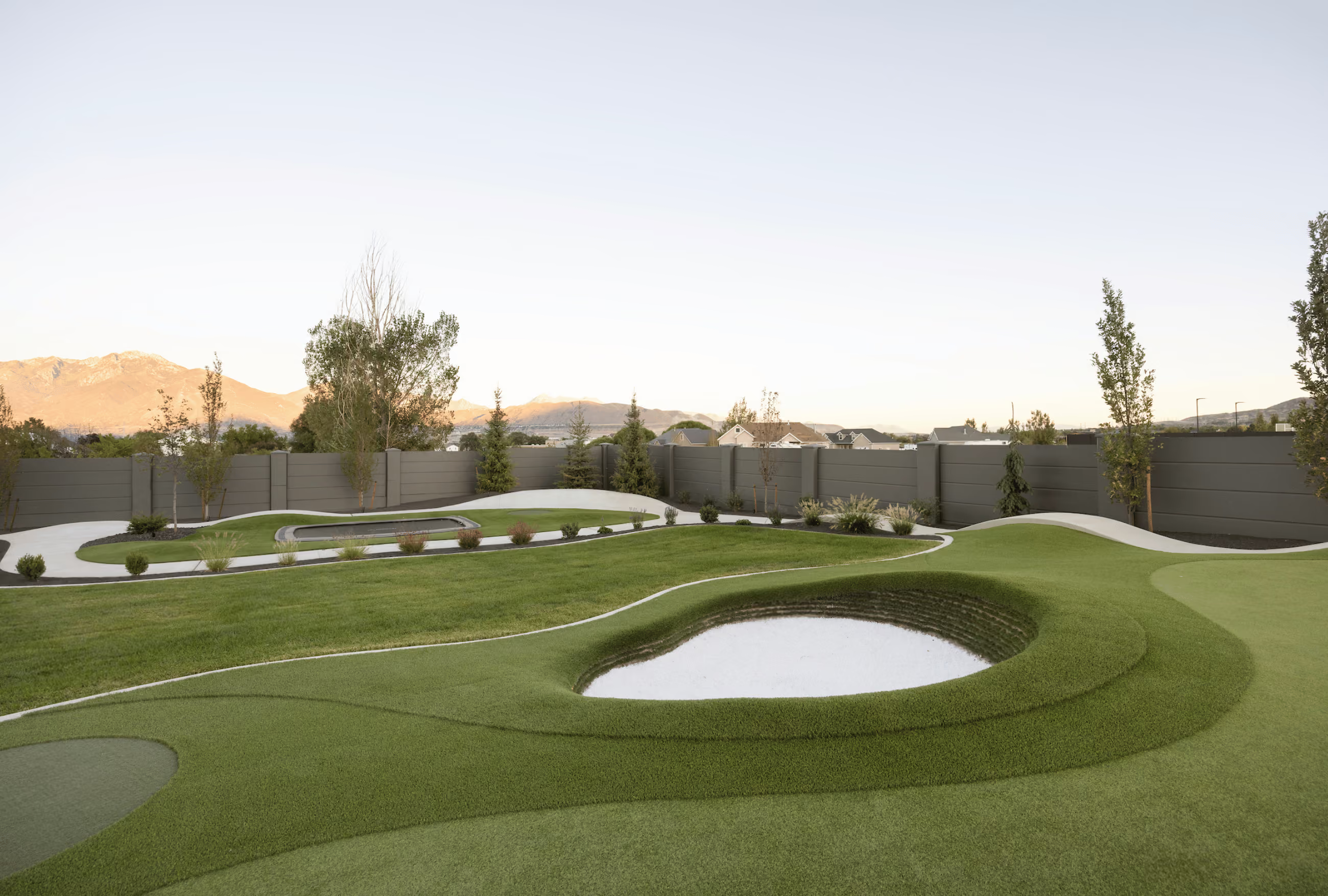
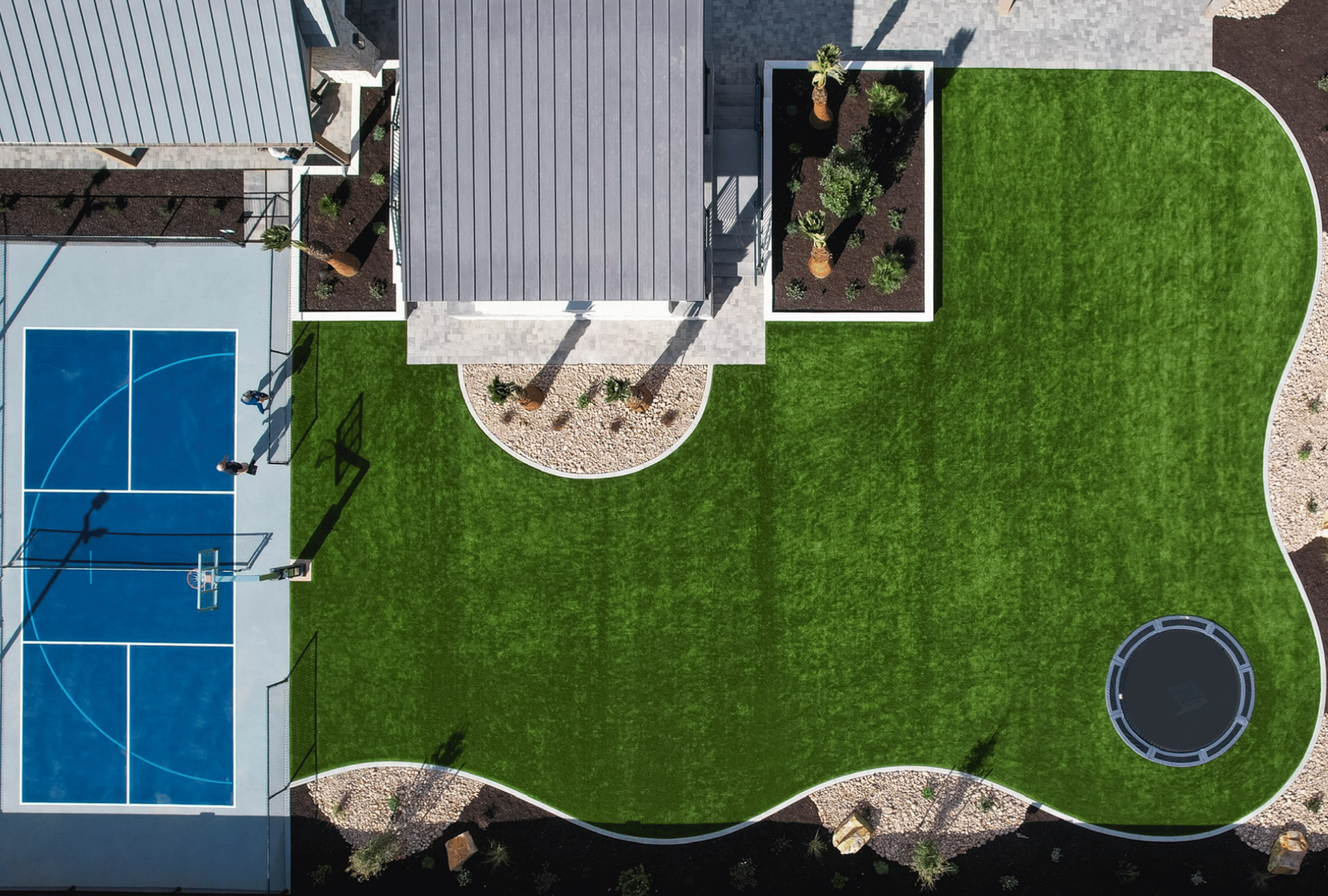
Turf provides the clean green surface people still want. Xeriscape elements reduce the amount of irrigated lawn. Plants, rock, pavers, and borders add depth and make the yard feel designed instead of simply replaced.
For Utah homeowners, this is often the most practical approach: use turf where people, pets, and families need a usable surface, then use water-wise landscaping around it.
Artificial Turf vs. Natural Grass for Water Use
Natural grass and artificial turf serve different purposes.
Natural grass is a living surface. It can provide cooling, softness, and a traditional landscape feel, but it also requires water, mowing, fertilizing, sprinkler maintenance, and seasonal care.
Artificial turf is a synthetic surface. It does not grow, so it does not need irrigation, mowing, fertilizer, or reseeding. It is best used in spaces where homeowners want the look and function of grass without the water and maintenance requirements of natural lawn.
Here is the practical comparison:
Natural grass needs regular irrigation to stay green.
Artificial turf stays green without regular irrigation.
Natural grass can struggle in drought conditions.
Artificial turf keeps a consistent appearance through dry weather.
Natural grass can become muddy, patchy, or worn down.
Artificial turf can create a cleaner, more durable surface when installed correctly.
Natural grass may still be useful in some parts of the yard.
Artificial turf can replace the areas where grass is least practical.
The best choice is not always one or the other. Many Utah yards benefit from a balanced design that includes turf, xeriscape, hardscape, and water-wise planting.
How Much Water Can Artificial Turf Save?
There is no single water savings number that applies to every home.
Actual savings depend on several factors:
• How many square feet of grass are replaced
• How often the lawn was watered before
• Whether the sprinkler system was efficient or overwatering
• Local water rates
• Weather conditions
• Soil type
• Shade and sun exposure
• Whether the project includes xeriscape or planted areas
• How often the turf is rinsed for pets or cleaning
That said, the direction is clear. If an irrigated lawn area is replaced with artificial turf, that section no longer requires regular watering to stay green.
For homeowners who are replacing a high-water or high-maintenance lawn section, artificial turf can be one of the clearest ways to reduce outdoor irrigation.
Best Areas to Replace First if Water Savings Is the Goal
If your main goal is to reduce water use, start with the lawn areas that are using water without adding much value.
1. Park Strips
Park strips are one of the most common places to rethink traditional grass. They are often hot, exposed, difficult to water efficiently, and not very usable.
Replacing a park strip with turf, rock, or a drought-smart design can reduce watering while improving curb appeal.
2. Side Yards
Side yards often struggle because they are narrow, shaded, sloped, or difficult for sprinklers to reach evenly. Many side yards become muddy, patchy, or unused.
Artificial turf can turn these spaces into cleaner walkways, dog runs, or usable side areas.
3. Pet Areas
Dog areas can be hard on natural grass. Urine spots, digging, worn paths, and mud can lead to constant repair.
Pet turf can reduce the need to water and reseed a section of lawn that pets keep damaging.
4. High-Traffic Backyard Areas
Some backyard areas get too much use for grass to recover. Kids, pets, outdoor furniture, and foot traffic can all wear down natural lawn.
Turf can create a more durable surface for the areas your family uses most.
5. Putting Greens
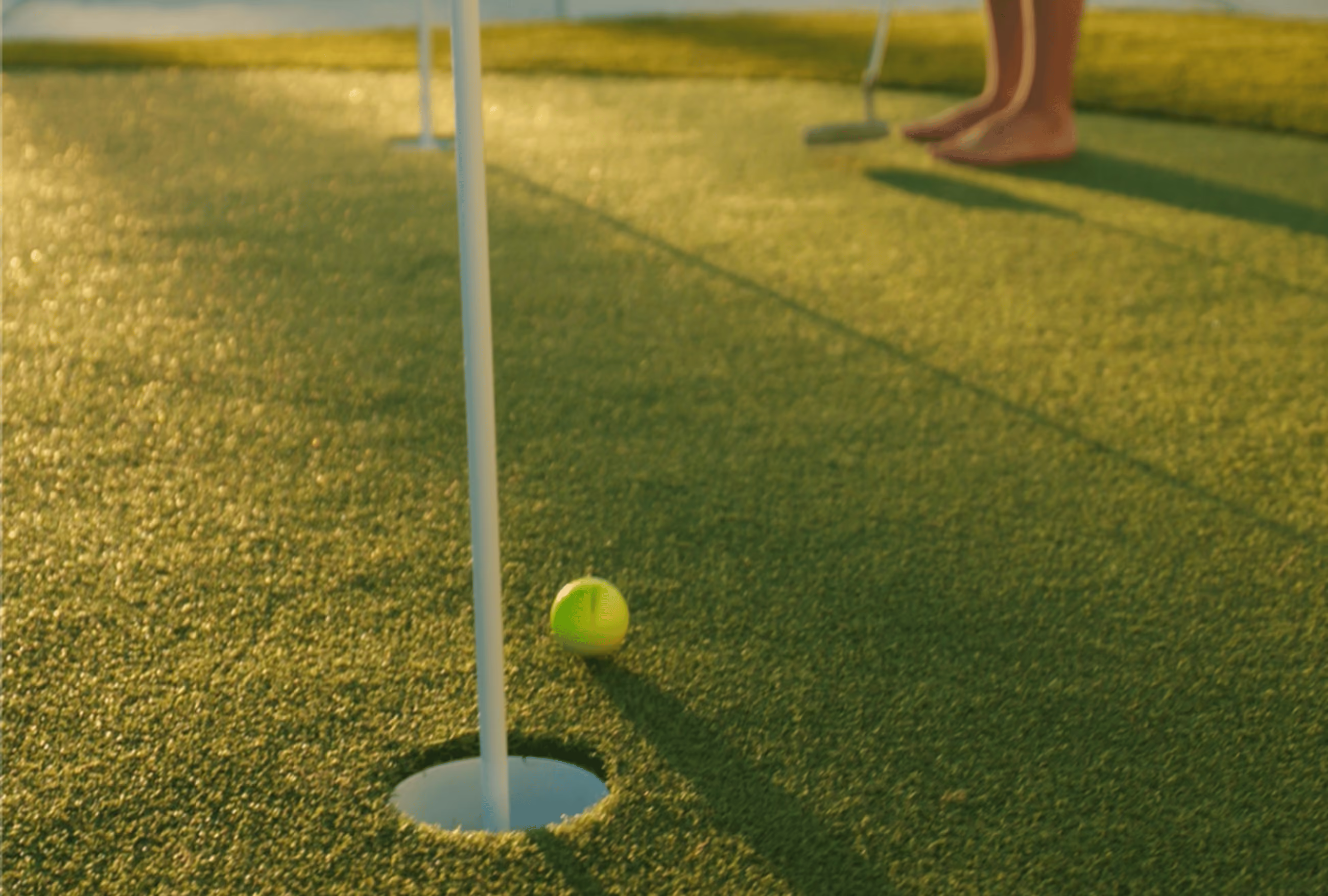
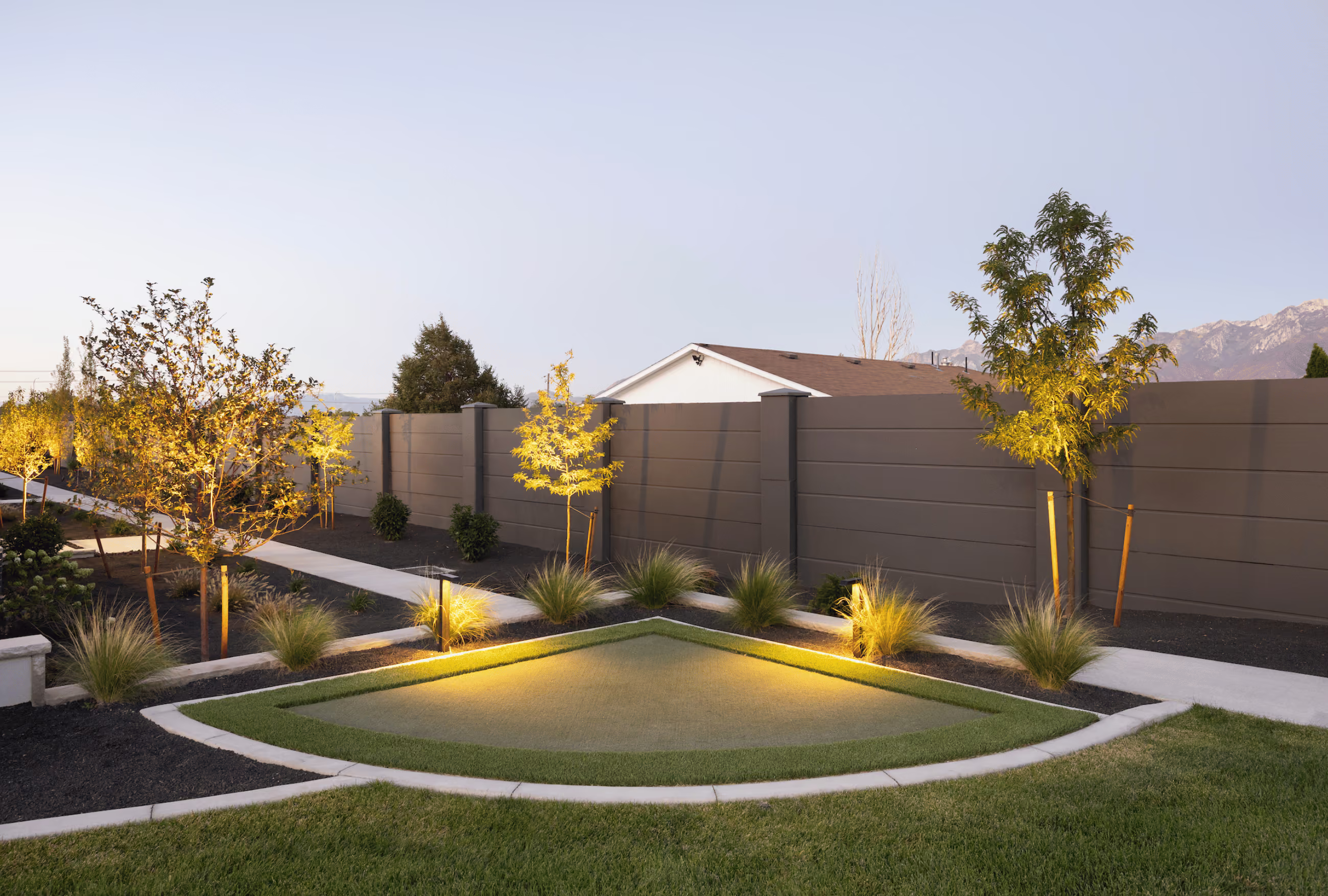
Putting greens are a premium use of turf because they create a recreational space without requiring the water and maintenance of natural putting surfaces.
6. Pool Areas
Around pools, natural grass can lead to mud, clippings, and uneven surfaces. Turf can help keep the area cleaner and more finished while reducing irrigation near the pool.
7. Decorative Front Yard Sections
Some front yard grass is mostly for appearance. If that lawn section takes a lot of water but is not used often, turf and xeriscape can create a polished look with less maintenance.
Does Artificial Turf Help During a Drought?
Yes. Artificial turf can help during drought by replacing high-water lawn areas with a surface that stays green without regular irrigation.
During drought conditions, homeowners are often asked to water more carefully, reduce waste, and avoid overwatering. Artificial turf helps by removing irrigation needs from the sections where it is installed.
It also helps homeowners avoid the common drought-season cycle of watering, browning, repairing, reseeding, and watering again.
That does not mean turf is the only drought-friendly option. Water-wise plants, efficient irrigation, mulch, drip systems, decorative rock, pavers, and drought-tolerant lawn varieties can all play a role.
But for areas where homeowners still want a clean green surface, artificial turf is one of the most practical solutions.
What Homeowners Should Know Before Installing Turf
To get the best results, homeowners should not choose turf based only on color or price.
The right product and installation plan should match how the space will be used.
Important questions include:
• Is the area for pets, kids, putting, curb appeal, or general use?
• Does the area need extra drainage?
• Will the turf connect to pavers, rock, concrete, or planting beds?
• Is the area shaded, sloped, narrow, or high-traffic?
• Will pets use the area for bathroom breaks?
• Does the homeowner want full-service installation or supply-only pickup?
• What level of softness, durability, and realism is needed?
• How will the area be cleaned and maintained?
A putting green needs a different product than a pet area. A front yard needs a different look than a playground. A side yard needs different planning than a pool surround.
That is why product guidance matters.
Is Artificial Turf Environmentally Friendly?
Artificial turf can reduce water use in the areas where it replaces irrigated grass, but it should still be planned thoughtfully.
A well-designed yard should consider more than water savings alone. Heat, drainage, runoff, plants, shade, stormwater, material quality, and long-term maintenance all matter.
For many Utah homeowners, the strongest approach is not a yard made only of turf. It is a balanced design that uses turf for functional green spaces and pairs it with xeriscape, trees, plants, pavers, rock, and efficient irrigation where appropriate.
This creates a lower-water yard without losing structure, usability, and curb appeal.
Why Utah Homeowners Choose Elite Turf Supply
Elite Turf Supply helps homeowners, contractors, landscapers, commercial facilities, sports fields, putting green customers, pet area customers, playground projects, pool areas, and DIY turf customers choose the right turf for the job.
That matters because not all turf products are designed for the same use.
A pet area needs drainage and durability. A putting green needs performance and precision. A front yard needs a natural, premium look. A playground needs comfort and usability. A contractor may need fast pickup, delivery, and product support. A homeowner may want full-service installation from start to finish.
Elite Turf Supply offers premium artificial turf products, expert product guidance, contractor support, fast pickup or delivery, and full-service installation options for customers in Utah and Idaho.
Whether you are replacing one problem area or planning a larger drought-smart yard upgrade, our team can help you choose the right product, layout, and installation option.
The Bottom Line: Artificial Turf Can Help Utah Homeowners Save Water
Artificial turf can save water in Utah by replacing traditional grass areas that need regular irrigation.
The biggest benefit is simple: artificial turf stays green without daily lawn watering.
For homeowners dealing with drought conditions, high water use, brown patches, sprinkler problems, pet damage, or difficult lawn areas, turf can be a practical way to reduce outdoor irrigation while keeping the yard clean, green, and usable.
The smartest projects usually start with the areas that make the most sense:
• Side yards
• Pet areas
• Park strips
• Putting greens
• Play areas
• Pool surrounds
• High-traffic backyard sections
• Decorative front yard areas
• Problem spots that never stay green
When artificial turf is paired with xeriscape, decorative rock, pavers, concrete, water-wise plants, and good design, it can help create a yard that is better suited for Utah’s dry climate.
Less watering. Less maintenance. More usable outdoor space.
Ready to Build a Lower-Water Yard?
Elite Turf Supply can help you choose the right turf product, layout, and installation option for your space.
Get help with:
• Artificial turf installation
• Pet turf
• Putting greens
• Playground turf
• Pool areas
• Side yards
• Park strips
• Front yard turf
• DIY turf supply
• Contractor turf support
• Turf and xeriscape planning
Book your free quote today and learn how artificial turf can help you create a cleaner, lower-maintenance yard built for Utah’s dry climate.
Call or text: (385) 248-0577
Visit: EliteTurfSupply.com
Quick Answers About Artificial Turf and Water Savings in Utah
Does artificial turf save water in Utah?
Yes. Artificial turf can save water in Utah when it replaces traditional grass areas that require regular irrigation.
How does artificial turf reduce water use?
Artificial turf reduces water use because it does not need regular watering to stay green. Any irrigated lawn area replaced with turf no longer needs daily lawn irrigation.
Does artificial turf need to be watered?
Artificial turf does not need watering to grow or stay green. Some areas may need occasional rinsing for cleaning, especially pet turf or high-use spaces.
Is artificial turf good during a drought?
Yes. Artificial turf can be a practical option during drought because it provides a green, usable surface without regular lawn irrigation.
Should I replace my whole lawn with artificial turf?
Not always. Many homeowners start with the areas that use the most water, get the most wear, or never stay green, such as side yards, pet areas, park strips, and high-traffic sections.
Is turf better than xeriscape?
Turf and xeriscape solve different problems. Turf is best for usable green space, while xeriscape is best for low-water planting areas, rock, hardscape, and overall yard structure. Many Utah yards work best with both.
Can artificial turf be used with drought-tolerant plants?
Yes. Artificial turf can be paired with drought-tolerant plants, decorative rock, pavers, concrete, mulch, and drip irrigation to create a more complete water-wise landscape.
What areas of the yard save the most water when replaced with turf?
The best areas to start are high-water or hard-to-maintain lawn sections, including park strips, side yards, pet areas, high-traffic backyard areas, and decorative lawn sections.
Who installs artificial turf in Utah?
Elite Turf Supply provides premium artificial turf products, expert guidance, contractor support, fast pickup or delivery, and full-service installation options for customers in Utah and Idaho.
.png)
.png)
.png)