Turf infill is far more than just filler material between artificial grass blades. It’s a critical engineered component that fundamentally impacts how synthetic turf performs and how long it lasts. Understanding the science reveals why this often-overlooked layer deserves careful consideration.
The Mechanical Function
Infill serves multiple interconnected purposes. It weighs down the turf backing to prevent shifting and wrinkling, acting as ballast that keeps the entire system stable. More importantly, it provides structural support to individual turf fibers, helping them stand upright rather than matting down under foot traffic. This support maintains the turf’s natural appearance and creates a more realistic playing surface.
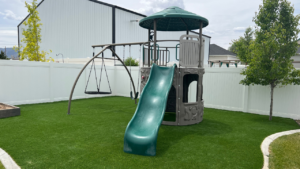
The infill also creates a cushioning layer that absorbs impact energy. When someone runs or falls on artificial turf, the infill particles compress and distribute force, reducing stress on joints and minimizing injury risk. This shock absorption quality varies significantly depending on particle size, shape, and material composition. Playgrounds that use artificial turf, for example, often use more or more buoyant infill along with thicker padding to effectively mitigate falls and accidents.
Heat Management
One of the most scientifically interesting aspects involves thermal dynamics. Darker infill materials, particularly crumb rubber, can absorb significant solar radiation and become extremely hot: sometimes reaching 150-170°F on sunny days. This occurs because the dark particles have low albedo (reflectivity) and high thermal mass.
Newer infill technologies address this through lighter colors, reflective coatings, or materials with lower heat retention properties. Some advanced infills incorporate phase-change materials or use plant-based components that naturally retain less heat. The temperature difference can be 30-50°F between traditional and heat-mitigating infills–that’s a huge difference!
Drainage and Water Management
Infill particle size and shape directly affect drainage rates. Rounded particles create larger void spaces that allow water to permeate quickly, while angular particles can interlock and potentially slow drainage. Proper infill selection ensures that fields drain efficiently, preventing puddles and maintaining playability during and after rain.
The infill layer also helps distribute moisture evenly during irrigation or cooling, which is increasingly important for temperature management on athletic fields.
Longevity Factors
Infill degradation significantly impacts turf lifespan. Rubber-based infills can break down through oxidation, UV exposure, and mechanical wear, producing dust and losing their structural properties. This degradation means regular top-dressing is needed to maintain performance.
Material compaction is another concern. Over time and with repeated impact, infill particles can compress and lose their cushioning properties. Some materials resist compaction better than others: coated sand, for instance, typically maintains its structure longer than pure crumb rubber.
Infill also protects the turf fibers themselves. By providing support and cushioning, proper infill reduces fiber abrasion and splitting, which are primary wear mechanisms in artificial turf. Fields with inadequate or degraded infill show accelerated fiber damage.
Performance Variables
The science of infill directly translates to athletic performance. Firmness and energy restitution affect how balls bounce and roll, critical for sports like soccer and field hockey. Too much cushion creates a “dead” field, while too little creates an overly firm, injury-prone surface.
Traction characteristics depend heavily on infill depth and material. Athletes need grip for acceleration and cutting movements, but excessive traction can cause knee and ankle injuries. The infill layer must balance these competing demands, which is why sports-specific infill specifications exist.
Material Science Advances
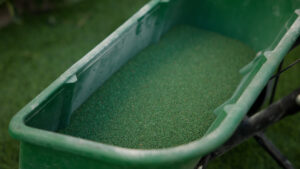
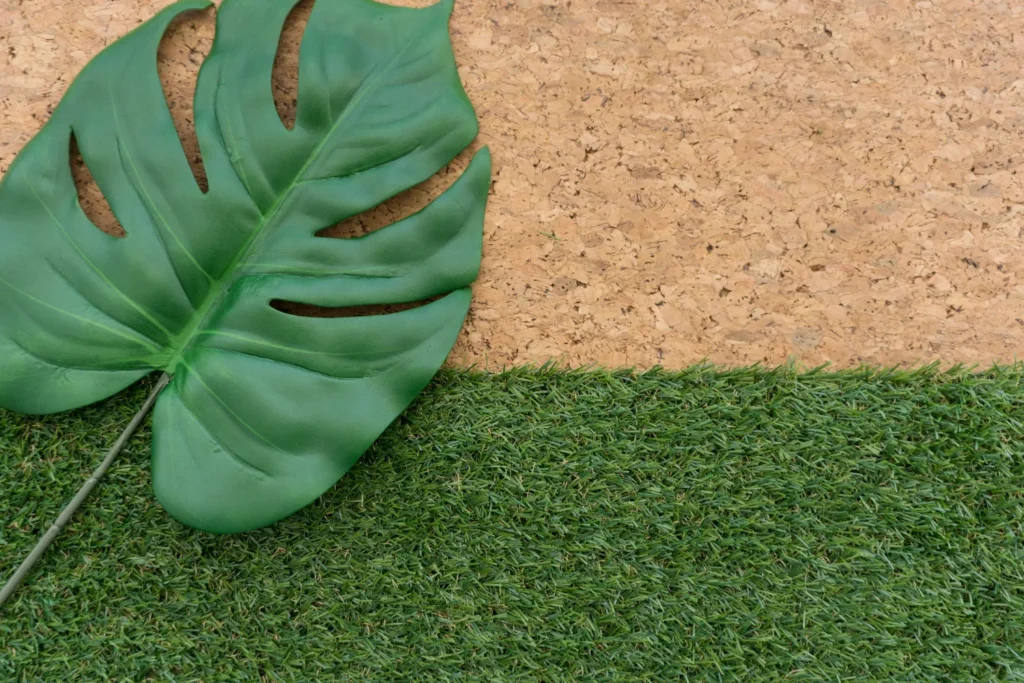
Modern infill technology has evolved considerably. Thermoplastic elastomer (TPE) infills offer rubber-like performance with better UV stability. Coated sand products provide weight and support with reduced heat retention. Plant-based options like coconut fibers or cork offer environmental benefits and natural cooling properties.
Each material has distinct properties: density, coefficient of restitution, friction coefficients, thermal conductivity, and durability profiles. The selection involves engineering trade-offs based on climate, usage intensity, sport type, and budget.
The Bottom Line
Infill isn’t just granular filler. It’s a sophisticated component where material science, thermal engineering, and biomechanics intersect. Choosing appropriate infill and maintaining it properly can extend turf life by years and significantly improve player safety and performance. The difference between a mediocre and exceptional artificial turf installation often comes down to what lies between the blades.
Want to Learn More?
If you’re considering an artificial turf project and want to get the best advice about turf and infill selection, reach out to Elite Turf Supply today. Our knowledgeable staff can help you understand the best infill for your project. Call us if you have any questions–we’re here to help!